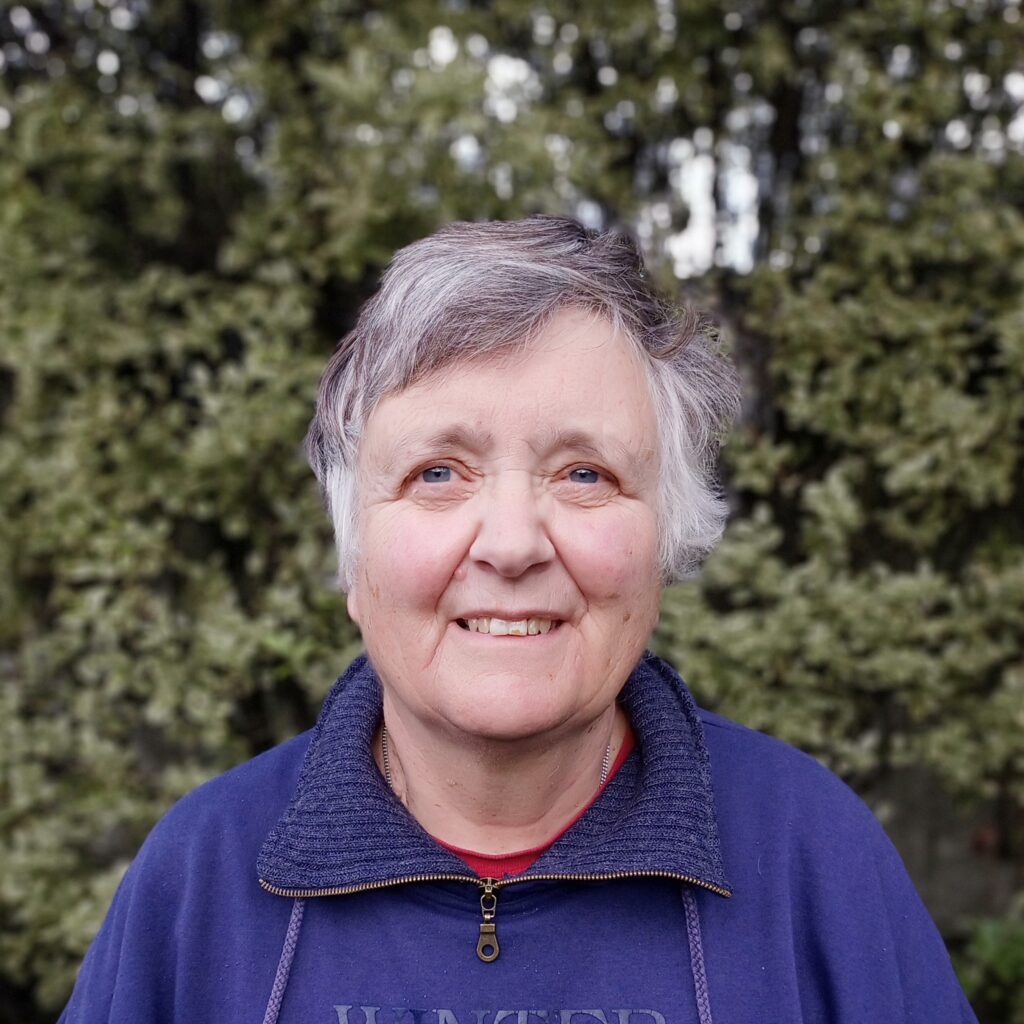

About 15 people gathered at St Aidan’s Anglican Church in Miramar on 22 August for A Rocha’s Wellington Local Group winter kōrero, where Hayley Stent from Love Rimurimu shared about the organisation’s work to restore seaweed forests in Wellington Harbour. The Love Rimurimu restoration project was initiated by Mountains to Sea Wellington and works with a range of partners.
Hayley began by telling us that seaweed – known as rimurimu – is good stuff. When growing in healthy abundance, it absorbs carbon, improves water quality, protects coastlines and provides food and habitat for thousands of marine creatures. It can even be turned into some delicious kai.
However, rimurimu is in serious decline in Wellington Harbour due to rising air and water temperatures, overfishing, increased sediment and pollution. These pressures have disrupted the natural balance of the ecosystem, allowing populations of grazing species to grow unchecked and munch their way through the harbour’s underwater forests.
By improving conditions and restoring juvenile and adult seaweeds at sites around the harbour, Love Rimurimu hopes to create the right environment for regeneration – helping nature return to a healthy, self-sustaining ecosystem.
Hayley introduced us to some of the seaweeds found in Wellington Harbour, particularly the brown seaweeds. These include giant kelp (rimurimu kakauroa), which Love Rimurimu is working with because it is more tolerant than some other species.
She then explained how Love Rimurimu is restoring seaweed forests around the rocky shores of the Miramar Peninsula. Kelp blades are harvested once they have developed fertile patches. In the laboratory, spores from these patches develop into male and female gametophytes. The male gametophytes release sperm, which fertilises eggs produced by the female gametophytes.
The resulting sporophytes settle on rocks and begin growing into the seaweed fronds familiar to us. The baby sporophytes are then attached to rocks, which are returned to the ocean floor.
Hayley had also brought along several different brown seaweeds collected from around Wellington Harbour for us to examine. Her fascinating presentation gave us plenty to discuss over afternoon tea, and everyone came away having learnt a great deal about the remarkable underwater forests found just off Wellington’s shores.
A Rocha’s Wellington Local Group would like to thank the St Aidan’s Eco Church group for hosting the event and providing afternoon tea.