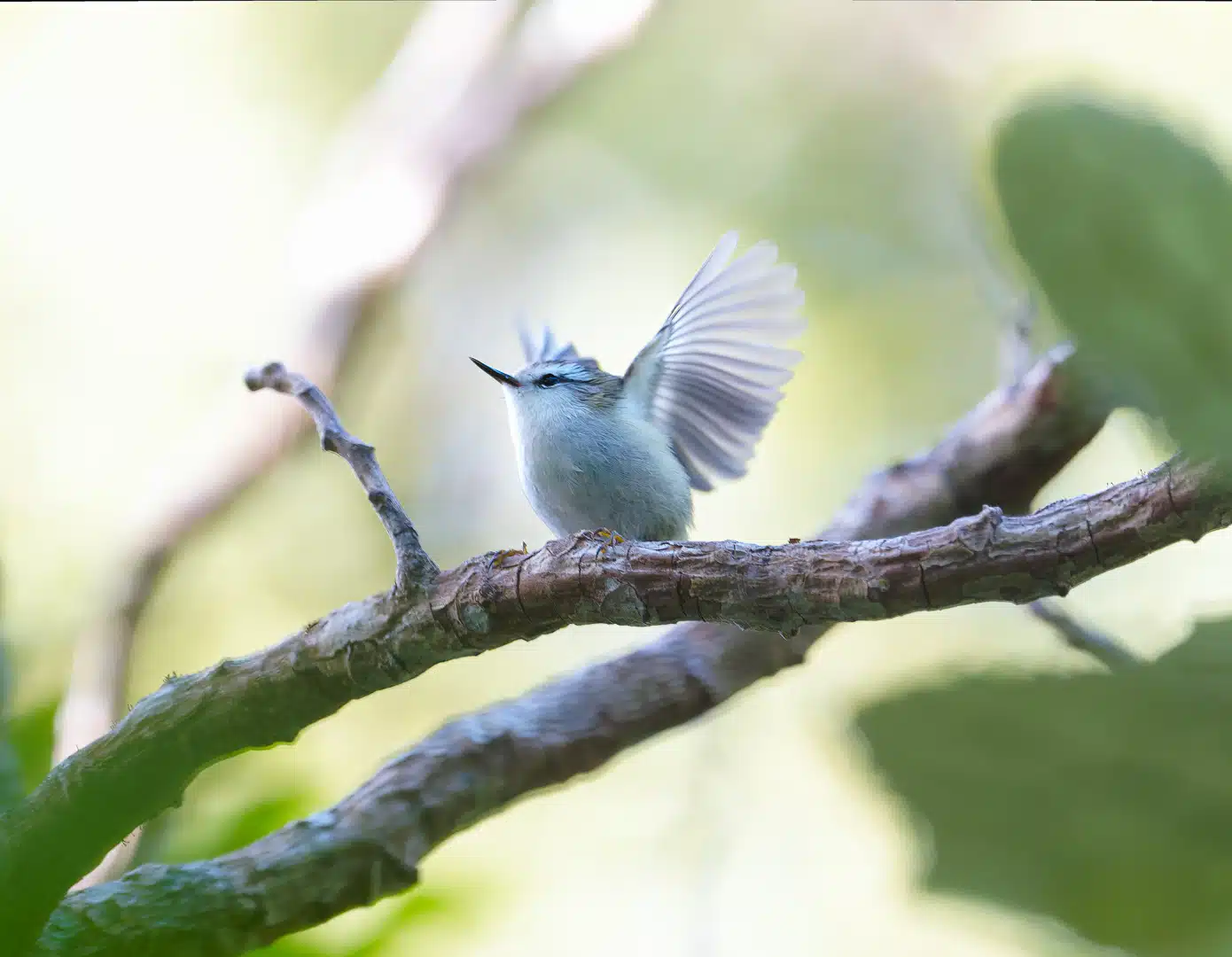
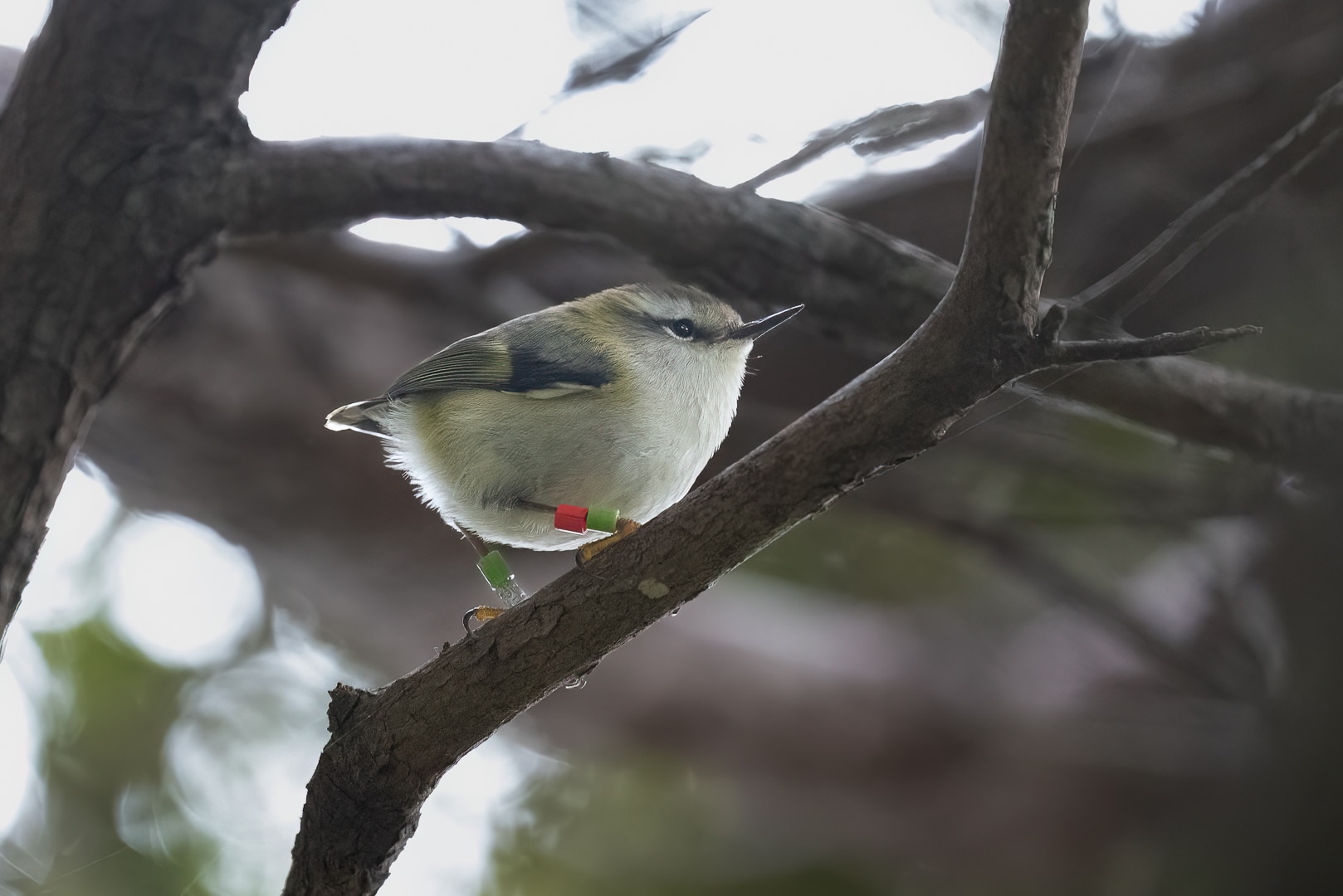
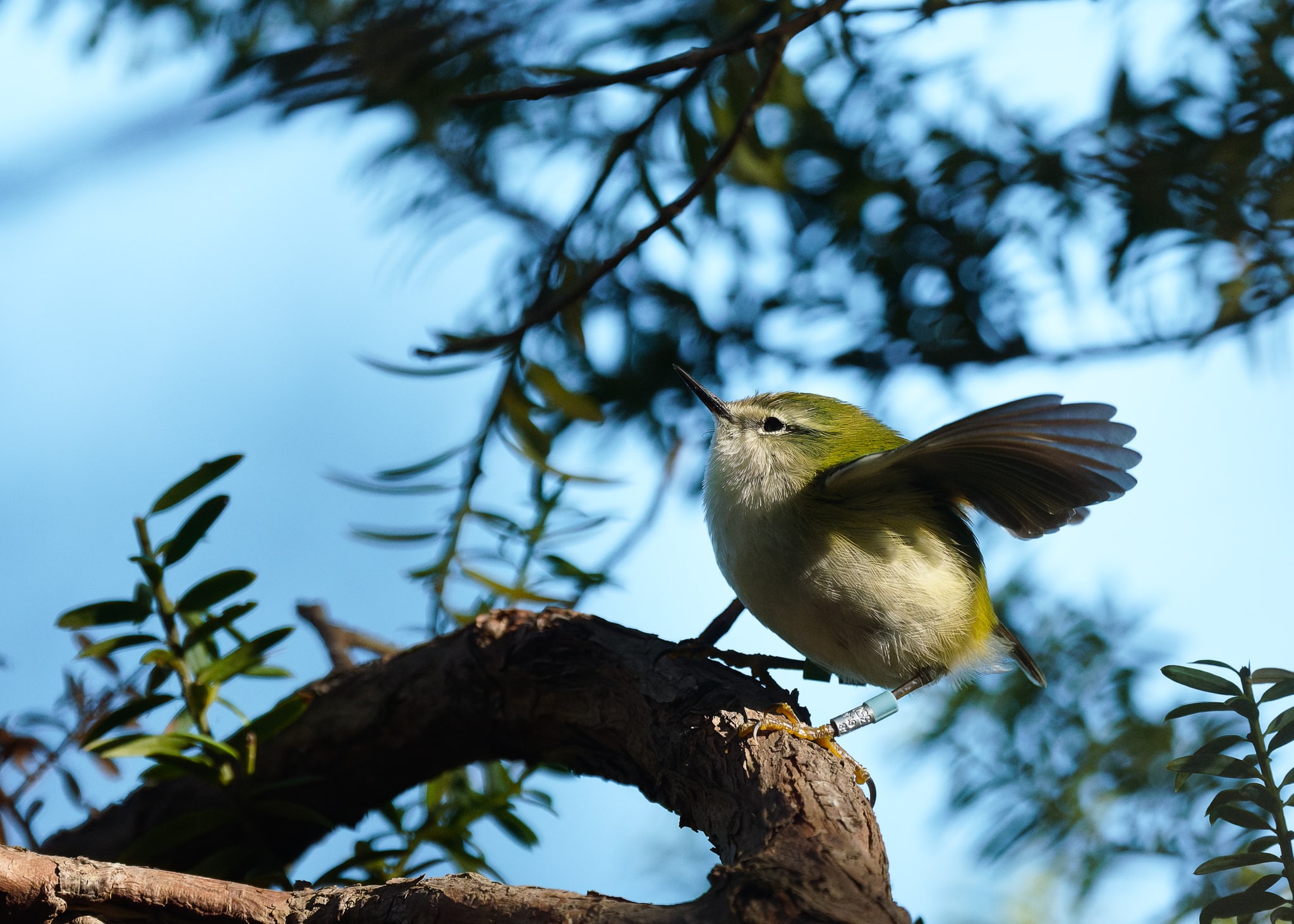
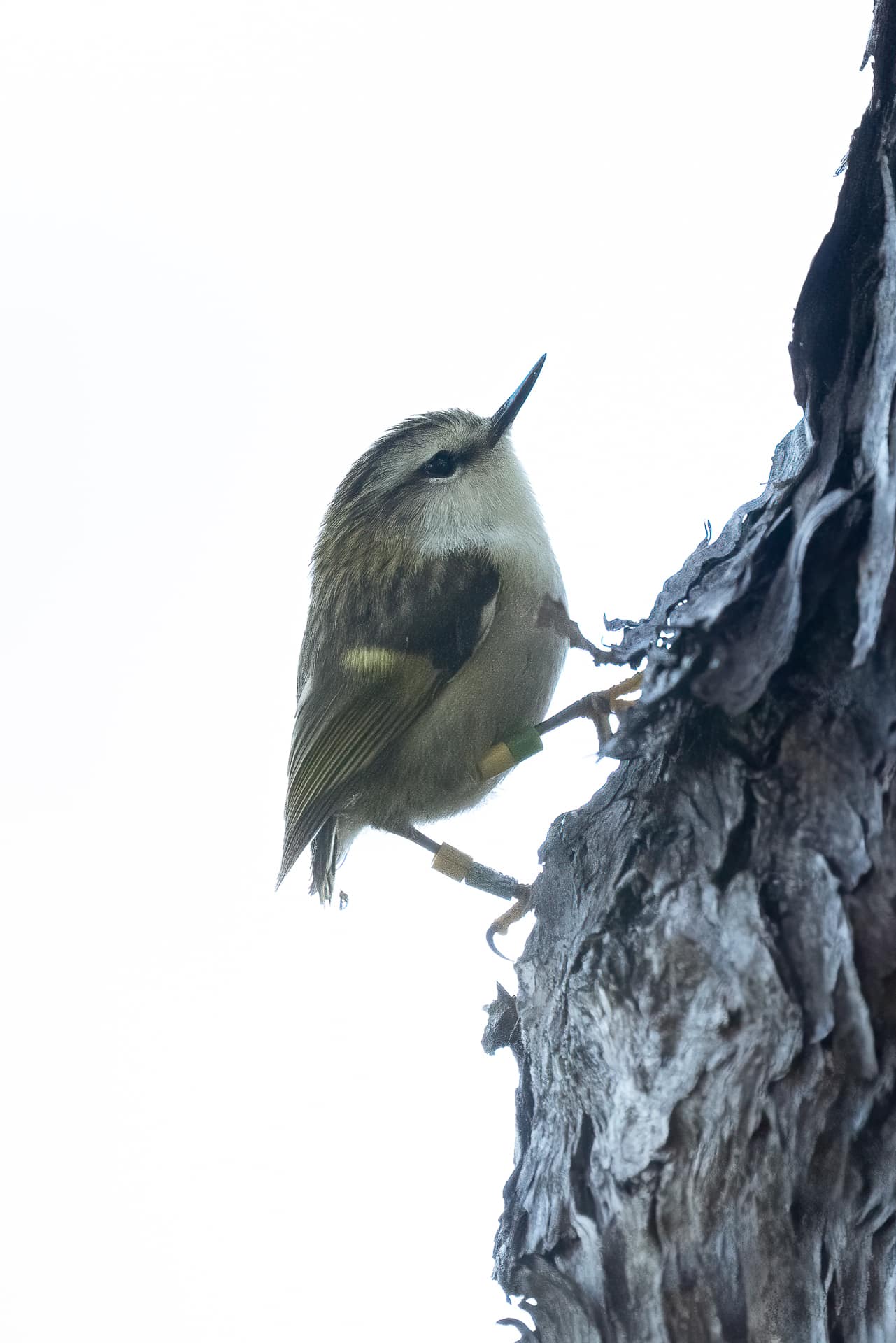
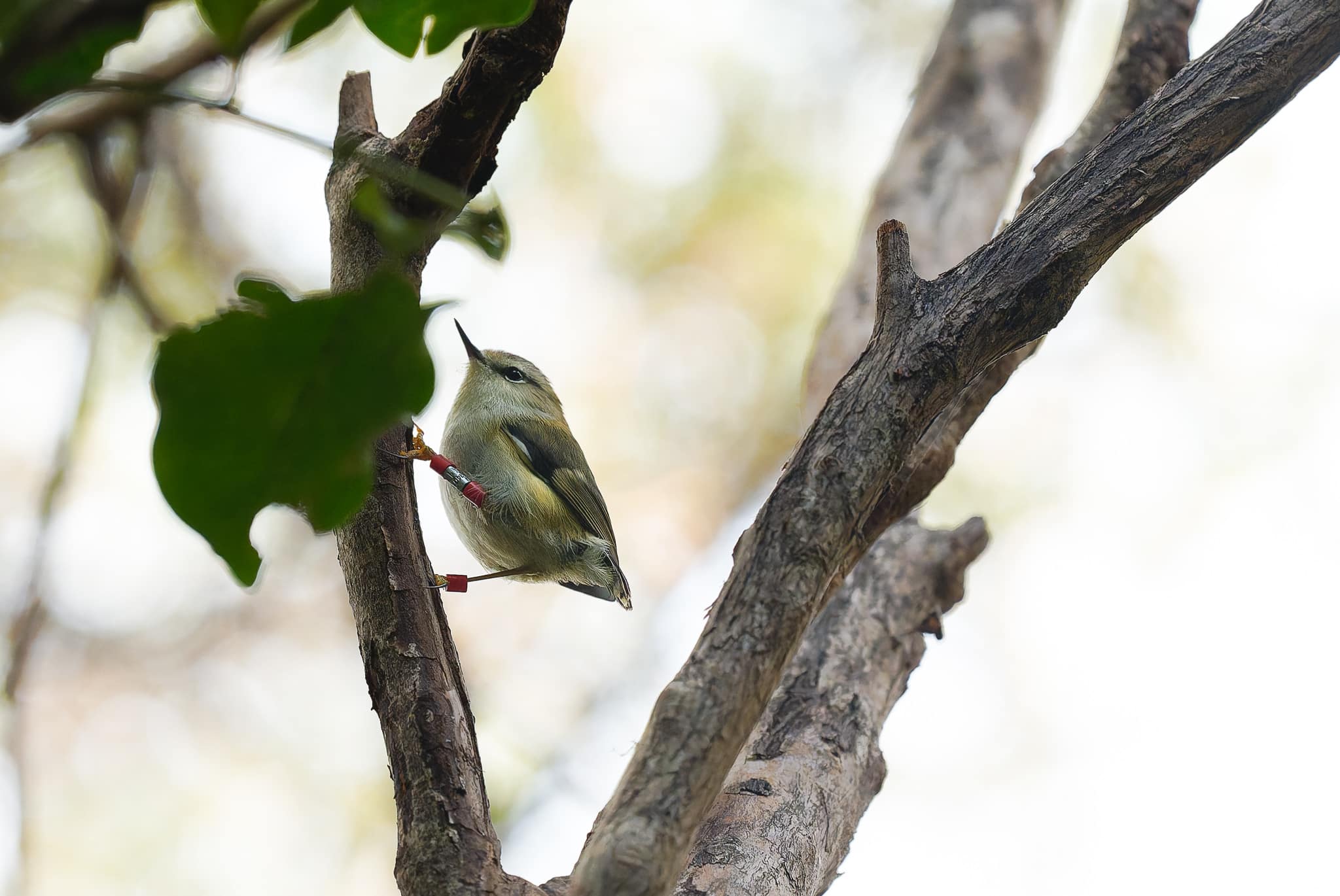
In the Song of Solomon, the writer rejoices when “the voice of the turtledove” is heard once more after the long silence of winter. In Kāpiti, another long-silent voice is beginning to be heard again – the song of the titipounamu (also known as tītitipounamu).
The titipounamu (rifleman) is Aotearoa New Zealand’s smallest bird, sometimes affectionately compared to a flying Brussels sprout. These tiny birds are locally rare in Kāpiti, with only a small remnant population remaining in the Akatarawa Ranges. Predation and habitat loss have contributed to their decline.
When local titipounamu expert Dr Greg Sherley suggested to A Rocha members Peter and Diana Kiernan that their native bush would make an ideal release site for a translocation, they – and the Kotukutuku Ecological Restoration Project (KERP), the small conservation group working on their property – enthusiastically agreed.
What began as a conversation about beekeeping (both Peter and Greg are amateur beekeepers) became a three-year journey to secure permission under the Wildlife Act to translocate titipounamu.
Looking back, Peter says that if he had known how demanding the process would be, he might never have agreed. But after years of work by a dedicated core team of six people, the preparation of a report of more than 150 pages, and the support of over 50 volunteers, 51 titipounamu were successfully translocated to Peter and Diana’s bush between February and May this year.
Today, the song of the titipounamu is once again being heard in this small corner of Kāpiti.
Peter says the project is a powerful example of what can be achieved when people of goodwill work together towards a shared purpose.
The Kiernans’ 17.3-hectare release site is clothed in mature kohekohe and regenerating kānuka. It forms part of Greater Wellington Regional Council’s Waterfall Road Key Native Ecosystem, comprising four neighbouring properties where possum control has been maintained for many years. On the Kiernans’ property, the KERP team has carried out intensive predator control for around a decade using a 50 × 25 metre trap grid.
The birds were sourced from the Wainuiomata water catchment, where intensive predator control has enabled a thriving titipounamu population to flourish. Taranaki Whānui ki Te Upoko o Te Ika supported the translocation from their rohe, and on arrival in Kāpiti, Ngāti Toa welcomed the titipounamu with a karakia before they were released into their new home.
To minimise stress, the birds were carefully captured, transported and released as quickly as possible into their new home. Certified mist-netters and bird banders generously volunteered their expertise over several days, supported by many helpers and drivers.
Monitoring has continued since the releases. During the first five weeks, volunteers carrying out regular transect surveys confirmed titipounamu on 18 occasions. A network of 55 AR4 acoustic recorders has also been installed throughout the bush, recording for four hours each day, with the recordings now being analysed.
To support the new population, volunteers have also built and installed 28 nest boxes, which will be monitored with cameras to observe nesting activity and detect any predators.
For Peter, the translocation is “a starting place, not an end in itself”. The hope is that the birds will establish, breed and gradually spread into neighbouring forests, eventually reconnecting with the populations in the Akatarawa and Hutt ranges. A patchwork of native bush links these areas, with predator control already well established in some places and expanding in others. While there are no guarantees, there is every reason for hope.
Peter has been deeply encouraged by the support the KERP team has received. Volunteers travelled from as far away as Auckland to provide the specialist certification required for mist-netting and bird banding, while local conservation groups donated from their own limited budgets to help make the project possible. The district council also contributed funding.
“It has been a long and difficult process,” Peter reflects, “but it’s a bit like having children – you probably wouldn’t do it if you knew what lay ahead, but the world is a much better place as a result.”
Thanks to the perseverance of volunteers, landowners, scientists and the wider community, the voice of the titipounamu is once again being heard in Kāpiti – a hopeful reminder that, with patience, partnership and care, nature can recover.
Listen to an interview about the titipounamu roundup on RNZ’s Morning Report and check out a short video of the catch process at Wainuiomata on RNZ: How to catch and move the country’s tiniest bird

And check out a short video of the titipounamu release in Kāpiti here: